In Service of Healthier Communities: Brian Wahl drives change through partnership in Uttar Pradesh, India
For nearly two decades, Yale epidemiologist Brian Wahl has aimed to understand and reduce the prevalence of pneumonia and diarrhea—the two leading killers of children under five years, both globally and within his focus region of South Asia.
Wahl’s work is driven by a firm conviction that initiatives to combat these and other preventable diseases in low-resourced settings are not only more ethical, but also more effective, when they actively engage target communities in identifying problems, establishing priorities, and taking action. “By living, working, and spending a significant time within communities,” he feels, “you begin to understand the context in a much more intimate way that allows you the opportunity to co-develop solutions with communities.”

While acknowledging significant advances made possible by a global push toward digitization of health records, Wahl advocates, “We still need representative, community-based research to understand and potentially adjust for some of the limitations in those sources of data,” such as the omission of individuals who do not seek treatment at hospitals and other health facilities.
Such limitations are particularly of interest in Wahl’s focus region of eastern Uttar Pradesh (UP)—a part of northern India where lack of access to health, transportation, and other infrastructure underlies conditions for some of the country’s most intractable health outcomes, particularly among young children and women of reproductive age. In the state of Uttar Pradesh, the infant mortality rate in 2022 was 38 compared to India’s national average of 26 per 1,000 live births.[1] The maternal mortality ratio in 2020-2022 was 141 compared to the national average of 88 per 100,000 live births.[2]
While these statistics reflect considerable improvement of health outcomes in UP over the past several decades, further advances continue to be stymied by a range of obstacles, including a lack of skilled health workers, the social and geographical isolation of marginalized communities, restrictive gender norms, and general mistrust of the public healthcare system. Development partners have worked for several years to address these challenges. Wahl feels, however, that there are too few community-centered, longitudinal research efforts focused on UP. “There has historically been a perception that it’s too difficult to do this kind of research here,” he acknowledges, “but I think we’re doing it.”
Importantly, the “we” to which Wahl refers is not a mere handful of individuals, but rather a network of researchers, health workers, government officials, and local leaders spanning two continents, whom Wahl has played an important role in bringing together in partnership, and to whom he credits the lion’s share of the initiative’s success. “The real value here is the team that we’ve set up—including the relationships that we’ve established and ultimately the research platform that we’ve developed—for doing what I would consider to be world-class research in a part of India that continues to claim some of the poorest health indicators.”
An innovative model of global collaboration
Bringing to fruition years of Wahl’s experience working with individuals and institutions in eastern Uttar Pradesh, the Sustaining Equitable Wellness through Advanced Research and Training in Health initiative was launched in 2020. Aptly acronymized as SEWARTH in a nod to the Hindi expression “sewarth,” meaning “in service,” the project is organized with a uniquely tripartite institutional structure that brings the Yale School of Public Health into partnership with the Department of Medical Health and Family Welfare, Government of Uttar Pradesh, and the All India Institute of Medical Sciences (AIIMS) Gorakhpur.

Working closely with both the Government of Uttar Pradesh and eastern UP’s leading medical institute has supported a scope for SEWARTH that includes not only the coordination of research goals and activities with governmental priorities, but also long-term capacity building through education and training for the region’s emerging health professionals.
In addition to workshops for public health and clinical professionals at AIIMS Gorakhpur, SEWARTH offers multi-day training modules geared toward a broader set of state health workers, many of whom have no formal public health qualifications. As part of these trainings, Wahl asks each group of participants to choose a health problem to focus on and then guides groups through a systematic process for understanding their selected problems’ key determinants, developing and prioritizing potential interventions, and creating a solution implementation plan. Based on their practical experience, participants propose locally adoptable interventions directly to policy makers, who have, in multiple cases, recommended that proposals be either implemented or researched further at the SEWARTH site.
One public health surveillance officer participating in a training decided to work on the problem of maternal anemia, which constitutes a major risk factor for maternal deaths in eastern UP due to poor compliance with iron supplementation during pregnancy. Through the structured training, she found that a change in state policy to recommend that women begin iron supplementation when they marry, as opposed to waiting until becoming pregnant, could increase program effectiveness. After this proposal was well-received by state health officials, SEWARTH is planning for its inclusion as one of the first interventions to be tested as part of its field research program.

It is an outcome that exemplifies SEWARTH’s ambitions for collaborative partnership—for mobilizing the expertise and resources available at Yale to empower solutions driven by local practitioners. As the partnership enters a new phase in launching an expansive, longitudinal research program, Wahl is proud of how SEWARTH continues to center priorities determined by its training program alumni and representatives of local institutions. “We, as in Yale, are playing a supportive role,” he emphasizes, “This work is being led by our partners on the ground.”
Cultivating community trust
In May 2025, SEWARTH began baseline data collection with local data enumerators to launch a longitudinal data collection platform known in the field of public health as a Health and Demographic Surveillance System (HDSS). The goal of an HDSS is to enlist the participation of a cohort of households within a geographically defined area and to periodically collect data on health outcomes and vital events, such as births, deaths, and marriages, over time.
SEWARTH’s HDSS is focused in and around the city of Gorakhpur and constitutes the first of its kind to be implemented throughout eastern UP and its neighboring state of Bihar, which experiences similarly poor health outcomes. It is also unique in its partnership between the state health department and local and global academic institutions. Whereas most HDSS sites encompass purely rural settings, this HDSS seeks to model the typical rural-urban distribution of UP by comprising both rural and urban populations, creating unique opportunities to analyze trends and test interventions across the two.

Ensuring community participation across such a varied population landscape has required a sustained effort to engage leaders and stakeholders spanning a wide range of community access points. As Wahl describes, “We’ve been engaging stakeholders all the way from the highest level in the state to the village leaders and the ASHAs in the community. Moreover, it has been an ongoing effort for us.”
In India, ASHAs (standing for Accredited Social Health Activists) are community health workers who serve as the primary bridge between the state healthcare system and communities, assigned to support roughly 1,000 people by encouraging vaccinations and maternal health and screening for basic illnesses. SEWARTH has built trust among each of the 55 ASHAs serving the areas encompassed by the HDSS over the course of several years. Wahl explains, “The first thing that any system needs to do when dealing with the frontline health workforce is to recognize their efforts, value their contribution, and pay them the respect to which they are entitled.”


SEWARTH has developed productive relationships with the elected leaders of the 11 villages and wards within the HDSS catchment area, including via extended dialogue sessions which introduced these leaders to the HDSS concept and goals while fielding related questions to ensure mutual understanding. Both ASHAs and village leaders have been involved in the identification of community members to join trained HDSS data enumeration teams, ensuring that local perspectives and knowledge are integrated with the expertise of members comprising research scholars, NGO volunteers, and nursing students.
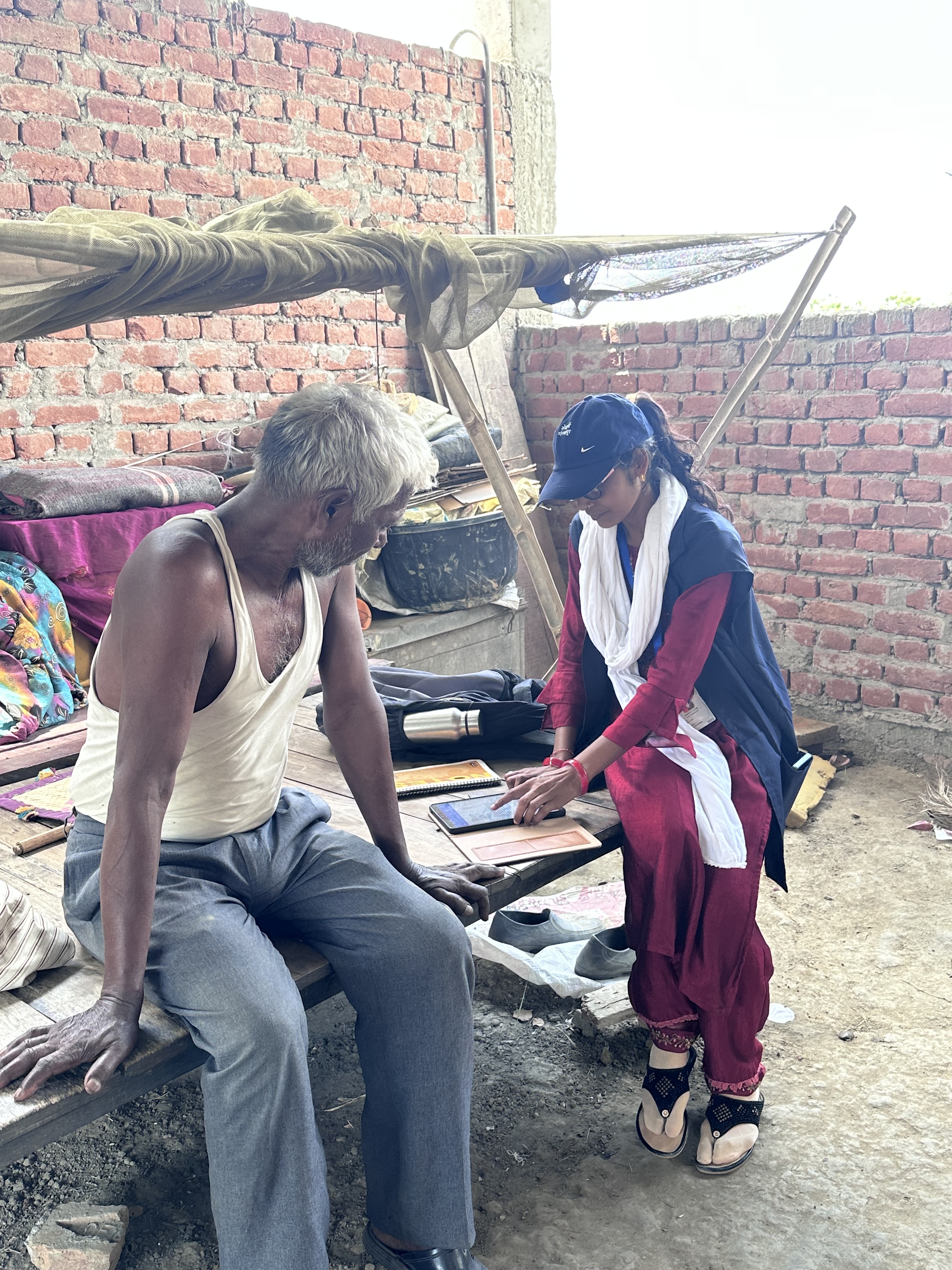
These expansive engagement efforts have resulted in a high degree of enthusiasm for participation among targeted communities. As of the completion of baseline data enumeration in August 2025, more than 13,700 households comprising roughly 60,800 individuals opted into HDSS participation. With this robust baseline established, SEWARTH is well-positioned to gather highly accurate data on a vast range of characteristics and health factors as it continues to collect data at six-month intervals.
As Wahl explains, “The real value in this is all the different kinds of studies that you can build on [the HDSS] that you wouldn’t be able to do in a hospital-based study or without an established relationship within a community.” In the case of the maternal anemia intervention study, for instance, the HDSS will provide fine-grained data on numbers of married and pregnant women, their compliance with iron supplementation, and how changes in compliance affect maternal anemia incidence over time. While other current priorities include conducting verbal autopsies to improve understanding of leading causes of death, improving vaccination rates, and addressing sanitation issues, Wahl is eager to see the HDSS integrate new ideas for research and intervention based on shifting community needs and partner capabilities as SEWARTH’s efforts continue to evolve.
Pursuing new directions at Yale
Wahl’s work with SEWARTH has already taken on new dimensions since he joined the Yale School of Public Health as Assistant Professor in the Department of Epidemiology of Microbial Diseases in the fall of 2024. “The work since coming to Yale has evolved in one really important and exciting way, which is that [being at Yale] is enabling much more interdisciplinary types of research,” Wahl explains.
These new research directions have largely been generated through connections formed with faculty peers via the South Asian Studies Council at Yale’s MacMillan Center for International Area Studies, which serves as a hub for over 50 faculty members from departments across the University who share research interests in South Asia. Wahl very quickly saw an opportunity to collaborate with Anthony Acciavatti, Diana Balmori Associate Professor in the Yale School of Architecture, who has been conducting fieldwork in Uttar Pradesh for more than two decades through his research on the Ganges River and groundwater extraction. Acciavatti recently joined Wahl to visit several SEWARTH field sites as the two explore possibilities for collaborative research on groundwater contamination and its association with adverse health outcomes.

Wahl has also begun collaborating with Swapna Sharma, the South Asian Studies Council’s Senior Lector of Hindi and Language Program Director, who is a native of UP. Through the support of a Collaborative International Research Grant from the MacMillan Center, Wahl and Sharma will systematically catalogue the varying uses of infectious disease terms in Hindi throughout UP, creating a dictionary that will serve as a valuable reference tool for public health officials and frontline workers. The hope is that preparing health workers to listen for and respond to a wider range of terms will reduce confusion and lead to better outcomes for infectious disease control efforts. As Wahl explains, “Better understanding community terms for infectious diseases and the belief structures behind them allows you to do more effective research and provide better care to the community.”
Wahl and his new faculty collaborators at Yale are excited to put a spotlight on the unique challenges facing UP and the leading scholars pursuing research throughout the state through a two-day symposium slated for April 2026. With support from the MacMillan Center’s Edward J. and Dorothy Clarke Kempf Memorial Fund, the symposium will bring a group of internationally based researchers to Yale’s campus to discuss a range of issues at the heart of UP’s paradoxical stasis between underdevelopment and potential growth—from agrarian crises, to competing priorities for management of the Ganges, to historical and contemporary caste relations.
While Wahl is excited for the opportunities that these new interdisciplinary collaborations and dialogues hold for shaping SEWARTH’s future, he feels strongly that greatest value of the initiative’s contributions to the field of public health lies in the sustained investment by the UP state government, AIIMS Gorakhpur, and other partners who have been involved from the beginning. “This work is really only possible because it’s being done in partnership,” he reflects. “Every single partner has put in resources. Every single partner has been a part of the design of this effort. Every single partner remains engaged. It’s a truly equal partnership with everybody being, I think, equally invested in the success of the effort.”
[1] Government of India. Sample Registration System (SRS) Bulletin, Volume 57, No. 1, June 2025: Reference Year 2022. Office of the Registrar General, Vital Statistics Division, Janganna Bhawan, New Delhi.
[2]Government of India. Special Bulletin on Maternal Mortality in India, 2020–22. New Delhi: Office of the Registrar General, Vital Statistics Division; June 2025.
Kamini Purushothaman constributed reporting for this article.
- Societal Resilience
- Leadership and Service
- Good Governance