Annu Jalais - K. Sivaramakrishnan Reflection
Annu Jalais
Krea University
Just as I was starting my PhD on the Sundarbans in 1999, I was told that a groundbreaking new book had been published and that I absolutely needed to read it. It was K. Sivaramakrishnan’s Modern Forests: Statemaking and Environmental Change in Colonial Eastern India. Modern Forests, which is grounded in extensive archival research on colonial Bengal, reframed state-making not as a top-down imposition but as a process deeply intertwined with environmental management bringing about state-society relations to the forefront. In a way, Shivi’s book started to make me think about connecting the forest to the people I was about to start studying. It inspired me to look at the state, at politics, at forest laws, at local culture(s) together instead of separately, and this foundational way of bringing these different issues to bear upon each other has since kept my research grounded.
Ten years later, in 2009, I had the good fortune of being accepted to the Agrarian Studies Programme. The Agrarian studies Program’s very inception in my life, became my lifeline; one that offered an interdisciplinary “safe-space” where anthropology, politics and history made sense together, not just at an intellectual level but also at a very real, visceral level. Over the following months I was repeatedly touched by how a scholar of Shivi’s stature did not stand on ceremony nor practiced hierarchy; instead, he adopted towards us younger unknown scholars a kind of respect and trust that ended up not just enriching our scholarship, but perhaps more importantly, making us feel confident about it.
Coming from the very hierarchical British academic system, it was at Yale’s Agrarian Studies Program that I learnt the importance of horizontal relations. The nurturing of these relations, through Shivi (and Jim of course), worked like an invisible “spirit,” igniting a sense of deep responsibility towards our planet, fellow scholars, as well as the “damned” of the earth. These founding horizontal relations also enabled us to grow “wings” where we felt we could soar as an “Agrarian Studies Collective” – one that extended beyond the boundaries of geography as well as of time. This was perhaps the most important message the scholars, artists, thinking non-scholars who all flocked to the Agrarian Studies Programs’ seminars received — we were a collective working towards finding alternatives to the world’s inequities — and what more important message can one receive today?
Shivi built up the “Agrarian Studies style” where irreverence and respect together enable the co-building of solid interdisciplinary intellectual work. Gathering together every Friday morning to discuss the unpublished work of a scholar whom we had “gagged” while we read, analyzed, and discussed their work, while they furiously took notes, was something I had never experienced before. In a spirit that was critical as well as respectful, we would engage sometimes in fast and furious debates across disciplines, place and time, as well as, at other times, reflect in deep and humble listening. All the while, we learnt from Shivi to be punctual as well as generous – with our time, with our knowledge, with our experience, with our fellow travelers at Yale and beyond. Enabling this generosity to continue flowing each day in my work as an academic of course but also in my identity as a fellow human has been my way of trying to repay the immense debt of gratitude I owe Shivi and the Agrarian Studies Program.
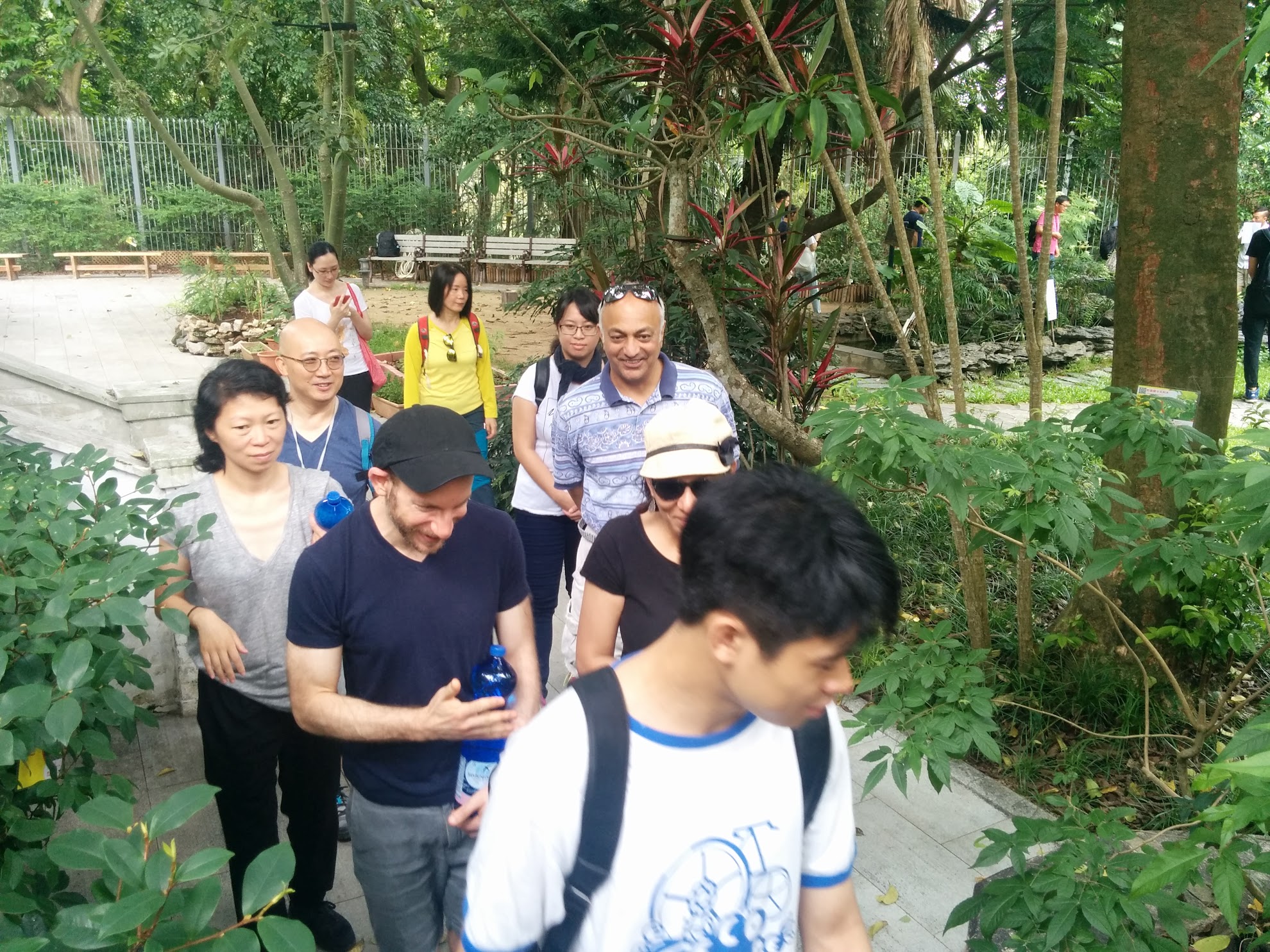
Another talent of Shivi’s has been to push us to dive deep into our research. My chapter for the book Shivi and Anne Rademacher edited called Death and Life of Nature in Asian Cities, was not just an exercise in writing an academic piece — it was also a life lesson in acute observation. We were invited to Hong Kong to discuss each other’s work – but this engagement with another’s work also involved walking through the Lung Fu Shan forest with people that taught us both about the flora and fauna as well as about the history of the place, it meant traveling to temples and learning about rivers, wind directions and waves of migration, it meant learning about each other and how we approached our scholarship. Learning how to write better, as we, in time, figured out, was all about learning how to observe in a more discerning way and beyond contributing a book chapter, I learnt how to be attentive to the profound connections that often lie deeper than what the eye can see.
Shivi has taught me to be an environmental anthropologist who today dares to make connections between mental health and climate breakdown, who takes the risk of comparing conceptions of the nonhuman between China and India, who is curious to understand how various disciplines can help us make sense of what keeps us human. The importance of trusted allies who share your vision of the world is perhaps the only thing that can sustain one through difficult times. When thinking about how we could best respond to our collective concern over global environmental degradation, rising social inequalities, and dispossession, I turn to Shivi’s lessons on how the intermixing of anthropology, politics and history, combined with a sustained and profound observation of the world around us, can help us find answers.
Thank you, Shivi, for being such an important guide to so many of us.

Annu Jalais, Assistant Professor
Krea University
Andhra Pradesh, India